
A work van can be more than a means of transporting personnel and tools. For Even Telecom, our engineers at TSN developed a mobile laboratory concept based on a medium-sized RAM ProMaster, with a layout focused on fiber optic splicing and repair tasks.
The project started from a specific need: to have an area where the crew could work with organized materials and tools while servicing transmission lines in the field. The configuration combines workspace, storage, and electrical resources inside the vehicle, along with exterior solutions for transporting equipment.
A Layout Designed Around the Work
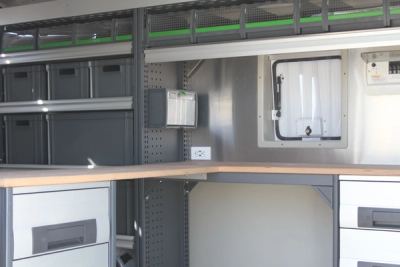
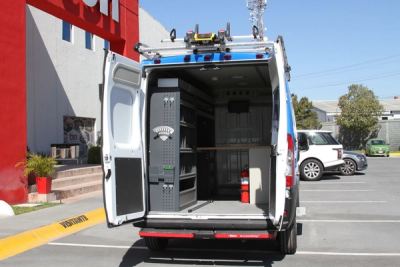
The proposal organizes the interior with modular racks, drawers, and an L-shaped workbench. This transforms the cargo area into a space where materials can be prepared, tools can be kept within easy reach, and fiber optic intervention tasks can be carried out.
On the opposite side, a panel is provided for organizing tools. The non-slip floor finish, interior lining, and reinforcements for securing the equipment are all part of the van's customization. The layout makes efficient use of the space available in a medium-sized vehicle while ensuring that personnel can move and work inside it.
Fiber and Tools Where They Are Needed
In telecommunications work, cables, tools, and ladders serve different purposes and require designated storage areas. For this project, side access points for fiber optic cable and fiber dispensers inside the vehicle were proposed. This allows the workflow to be organized from the exterior into the interior workspace.
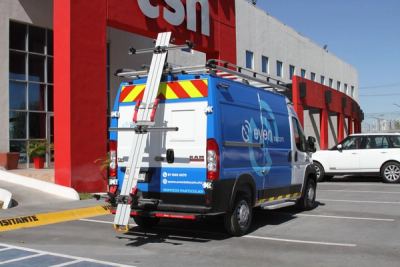
The racks and drawers provide dedicated spaces for separating materials and tools. A roof-mounted system was also proposed for transporting ladders, with mechanisms that make them easier to load and remove.
Conditions for Working in the Field
The proposal also considered the conditions surrounding the vehicle. It includes interior lighting and exterior perimeter lights, electrical outlets, a power supply system for the conversion, and additional climate control in the cargo area.
For everyday use, side and rear access steps were included. The configuration also incorporates cargo-area locks, exterior signaling elements, and fire safety equipment. Each element addresses a specific part of the operation: accessing the vehicle, organizing the work, protecting the equipment, and making the vehicle visible during field interventions.
Could a Similar Configuration Work for Another Company?
Even Telecom's configuration provides a starting point for discussing the needs of other telecommunications crews. The available vehicle, type of field operation, tools that need to be transported, and number of people working inside the unit all influence the most suitable design.
At TSN, we can review these needs to define the workspace, storage, and equipment required for a field service vehicle.